




Our digital in-house dental lab in DarmstadtRestorations made under one roof.
Scan instead of impression, design on screen, milling and 3D printing on site: in our MiM.Lab on Dieburger Straße, crowns, inlays, veneers and splints are made just a few steps from the treatment chair. For you that means short distances, no impression tray, shade matching right here – and on request, a crown can be ready in a single day thanks to CEREC.
Mon–Thu 8–18 · Fri 8–17 · Dieburger Straße 10, Darmstadt
You will notice the difference most if …
Four situations in which in-house production makes everyday life noticeably easier.
- you need a crown, an inlay or a veneer and want as few appointments as possible
- you found impressions with putty unpleasant or tend to gag
- you need a night guard or sports mouthguard that fits exactly
- a crown or splint needs adjusting or reworking, ideally right away
The point is not the equipment. It is your time.
An in-house lab sounds like technology. In everyday life it mainly means fewer trips, less waiting, fewer compromises. Four things you will actually notice.
Fewer appointments
Scanning, design and production all happen here in the practice, not in a laboratory across town. There is no waiting for the post, and adjustments are made on site. If you wish and it suits your situation, a crown or inlay can even be finished in a single day thanks to CEREC. Find out more: crowns with CEREC
No impression, no gagging
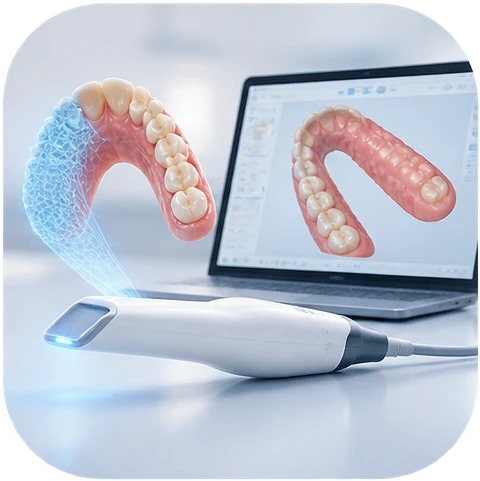
Instead of putty that has to set in your mouth, a small scanner passes over your teeth with light. Nothing presses against the back of your palate, and you can swallow at any time. Anyone prone to gagging finds this the biggest relief of all. And the scan is done in a few minutes. Find out more: digital impressions
Shade and shape matched on site
Our lab team sees your teeth in person, in daylight and in conversation with you, rather than working from a photo and shade guide at a distance. If a nuance is not right, it is adjusted immediately, not after a week in the post. The result is a restoration that belongs to you. Find out more: all-ceramic restorations
Quick adjustments and splints
Does the splint press, is a contact too high? We grind, polish and adjust in-house, often while you wait. Your scan stays on file: if a splint gets lost, a new one can be made from the data without another scanning appointment. Find out more: night guards
From scan to finished tooth: four steps, one roof.
This is how a crown is made with us. Splints and guides follow the same path, except that at the end the 3D printer works instead of the milling unit. Whether it is fitted the same day or at a second appointment is something we discuss with you beforehand.
Scanning
Once the tooth is prepared, the intraoral scanner glides over the upper and lower jaw like a large toothbrush. Thousands of individual images become a colour 3D model of your teeth in real time, which you see on the screen straight away.
Designing
The new tooth takes shape on the digital model. The software proposes a shape, and our lab team adjusts the chewing surfaces, the contacts with neighbouring teeth and the bite. The shade is matched directly against your teeth.
Making
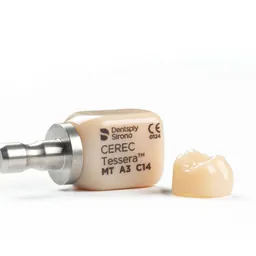
Crowns, inlays and veneers are milled from a ceramic block and fired in the furnace; splints and guides are printed layer by layer from resin. Every part is then finished, polished and checked.
Fitting
The dentist checks fit, contacts, bite and shade in your mouth and approves the piece. Only then is the crown bonded or the splint handed over. Small corrections can be made immediately. Whether fitting takes place on the day of the scan or at a second appointment depends on the material and the extent of the work. Find out more: the CEREC process
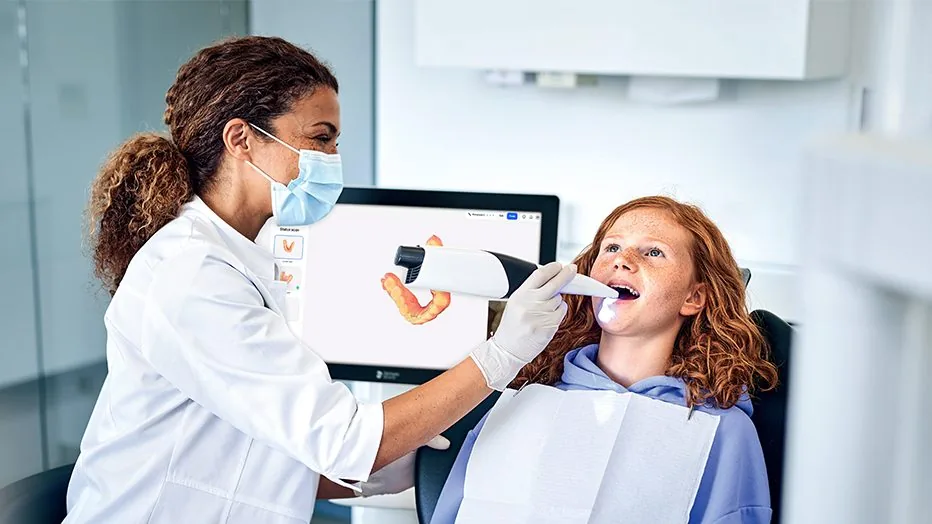
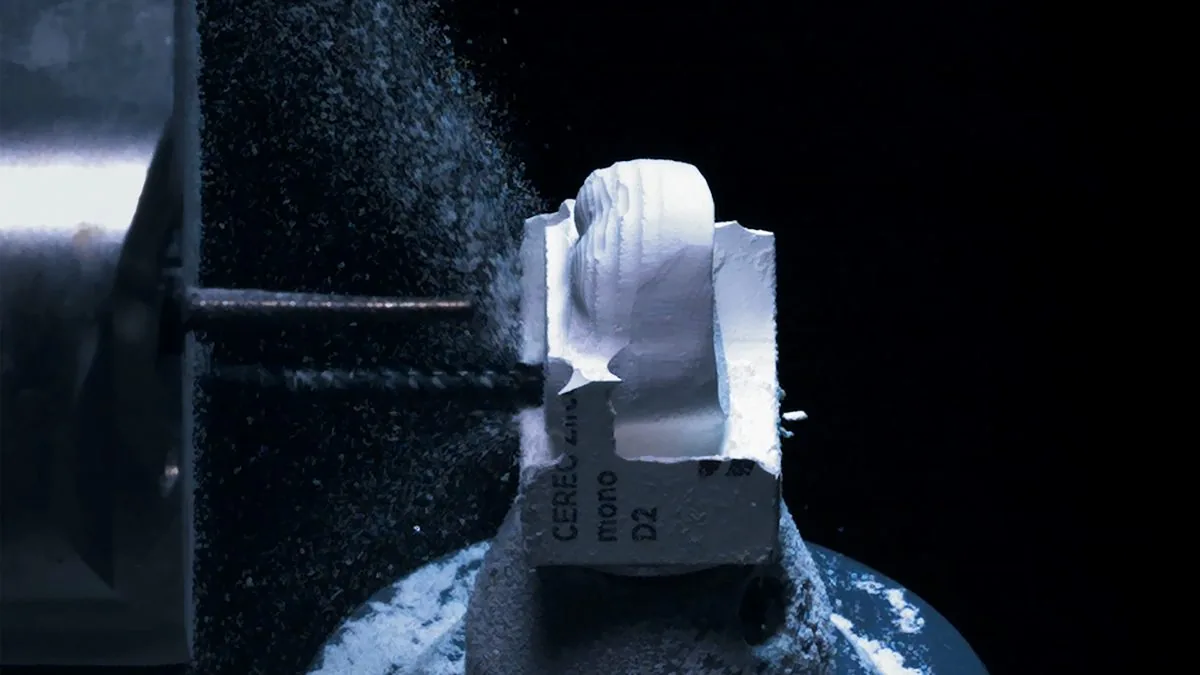
Everything that can be milled or printed.
From crowns to surgical guides: these are the pieces we make in our in-house lab. Every piece is checked and approved by the treating dentist before it is fitted.
Crowns & partial crowns
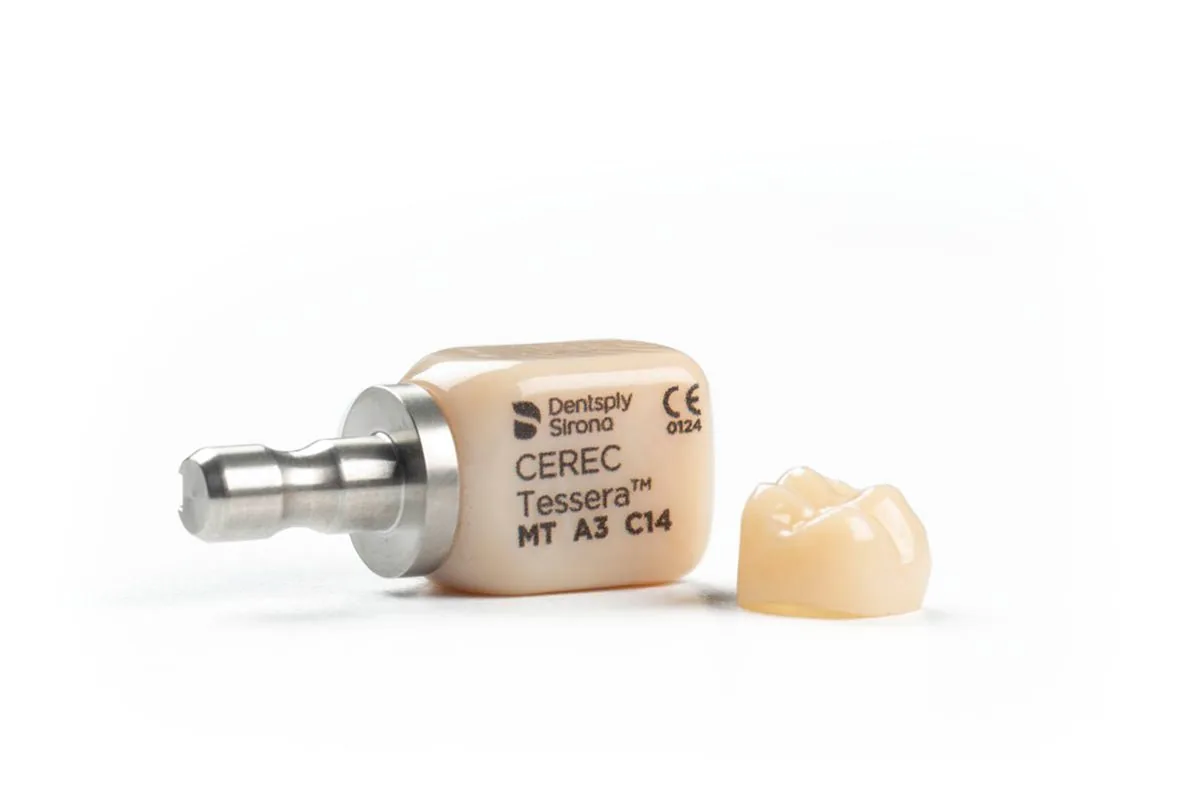
In glass-ceramic or zirconia; on request ready in a single day thanks to CEREC.
Find out more: CEREC Milled · ceramicInlays & onlays
Precisely fitting ceramic fillings for larger defects, shade-matched to the tooth.
Find out more: fillings & inlays Milled · ceramicVeneers
Wafer-thin ceramic shells for the shape and shade of the front teeth, planned digitally.
Find out more: veneers Printed · resinNight guards & sports mouthguards
Made of clear resin approved for the mouth, printed to the millimetre on your scan.
Find out more: night guards Milled or printedTemporaries
Interim restorations that look good and hold securely until the final work is ready.
Find out more: restorations Printed · from CBCT + scanSurgical guides
Guide the implant exactly to the planned position, calculated from the 3D X-ray and scan.
Find out more: implants Printed · modelModels & planning aids
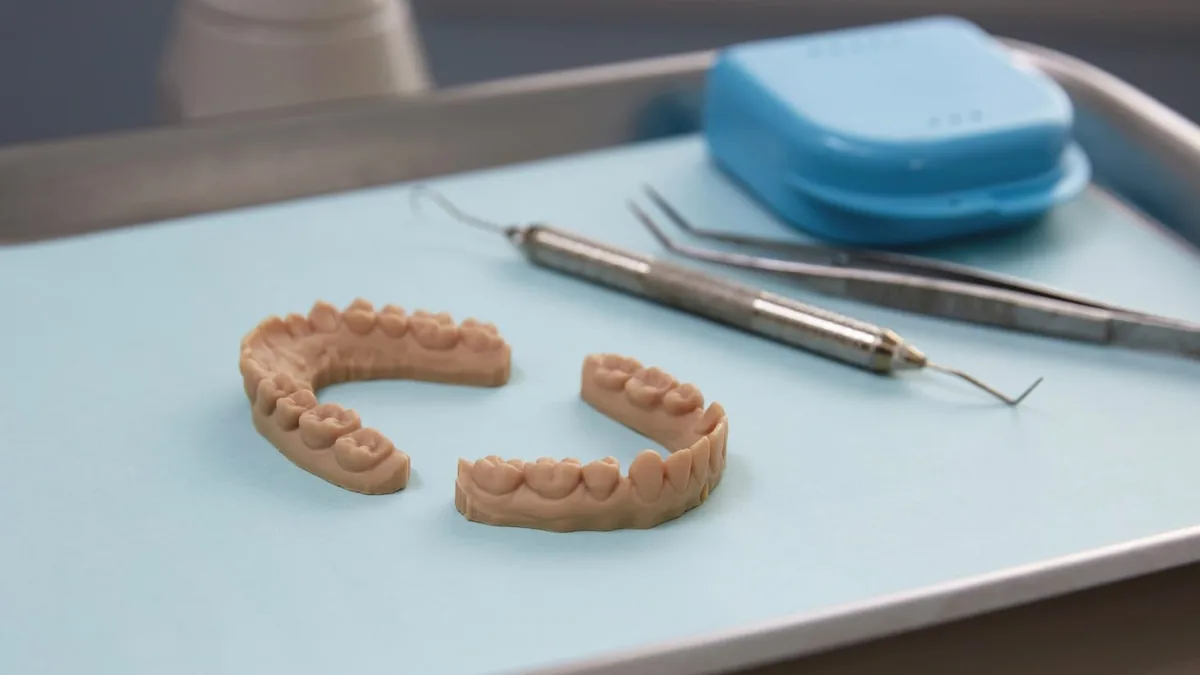
For looking, explaining and planning, for example before veneers or implants are made.
Find out more: 3D planning with CBCT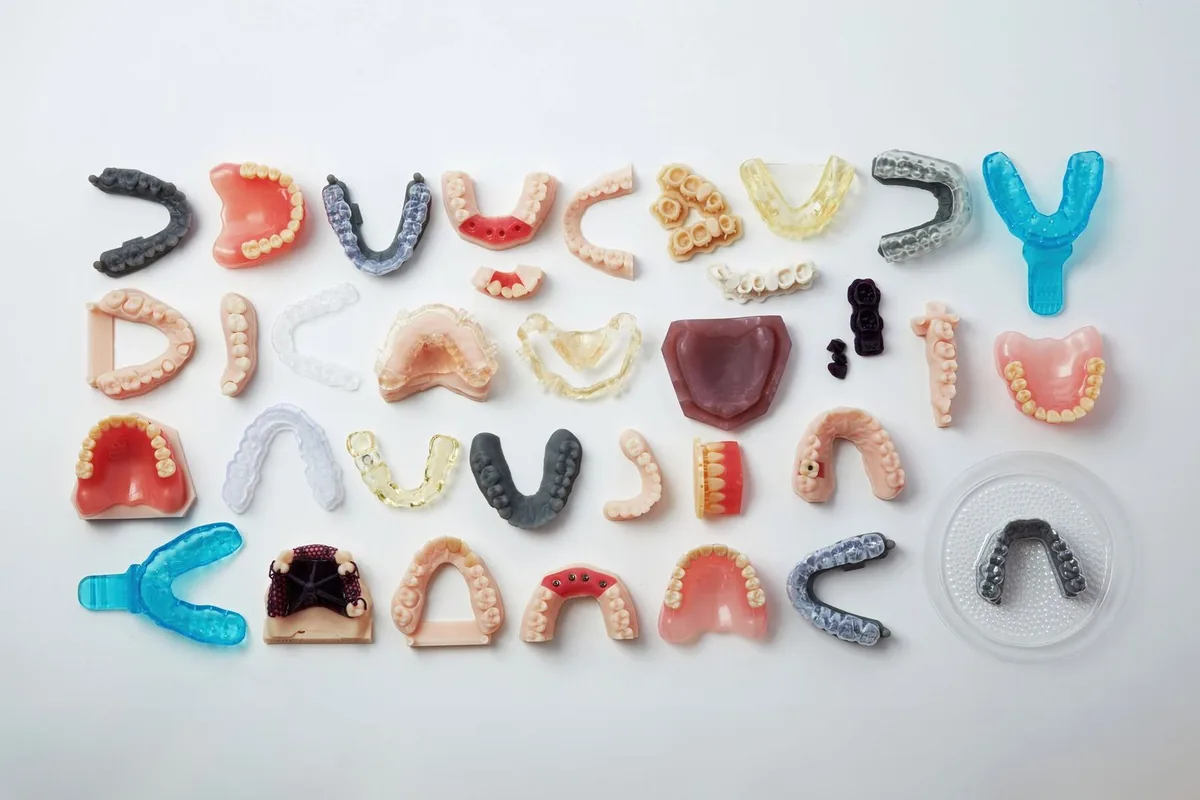
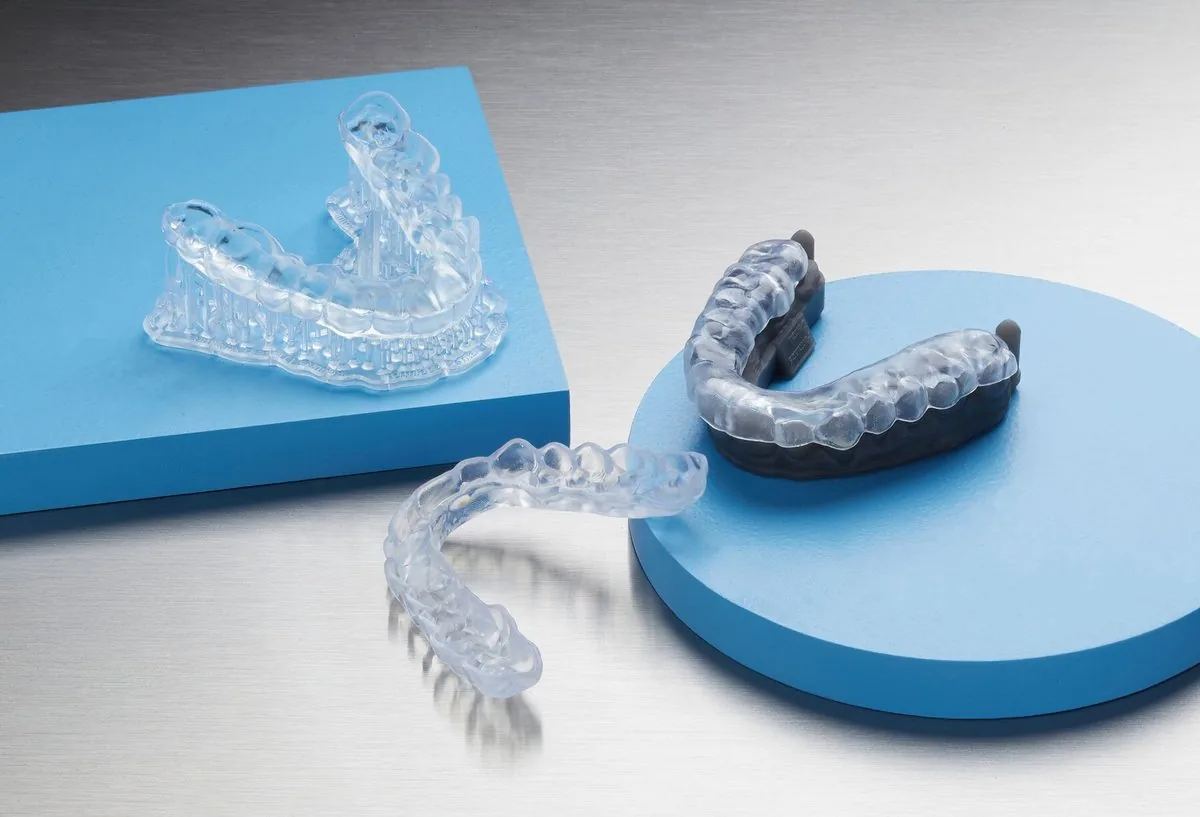
What is in our lab, and what it does for you.
Five stations, briefly explained. No jargon required.
Intraoral scanner
A pen-shaped camera that measures the surface of your teeth with light. Thousands of images per second are assembled into a colour 3D model. For you: no impression tray, no putty, no gagging, and an image you can understand yourself. Find out more: scan instead of impression
3D X-ray (CBCT)
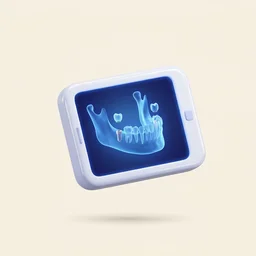
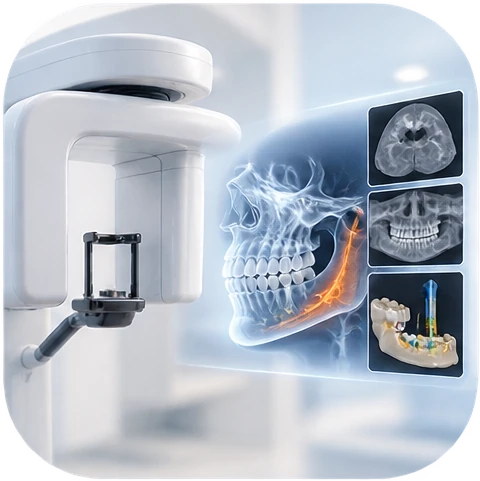
Shows jawbone, nerves and tooth roots in three dimensions rather than flat. Together with the scan, it forms the basis for implant planning and the surgical guide. For you: a plan you can follow on screen. Find out more: CBCT
Milling unit
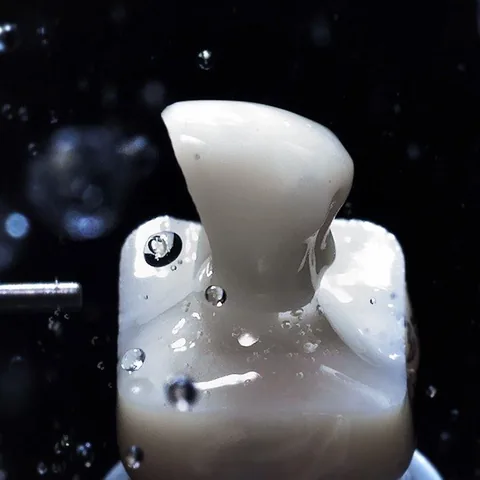
Fine diamond and carbide tools carve the crown out of a small ceramic block, accurate to a few hundredths of a millimetre. Glass-ceramic is ground with water cooling; zirconia is milled dry and then sintered. For you: a fit based on your scan, not on a plaster model. Find out more: CEREC
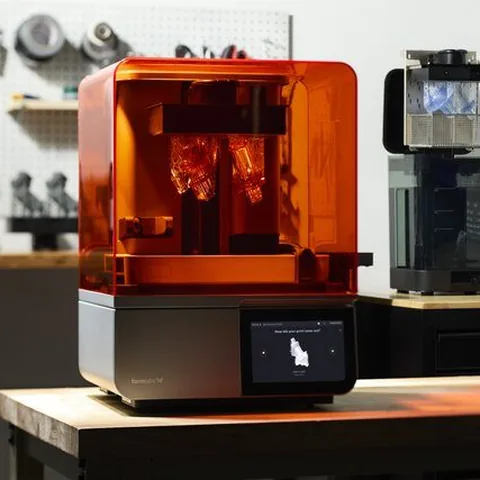
3D printer
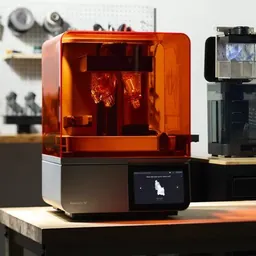
The printer holds liquid resin that is cured with light, layer by layer. This is how splints, surgical guides and models grow in one to two hours. They are then washed, post-cured under UV light and polished. For you: splints that sit exactly on your scan, made of material approved for the mouth. Find out more: night guards · sports mouthguards
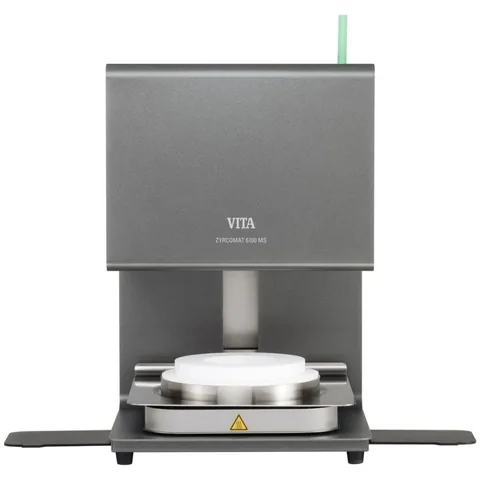
Furnaces & materials
Glass-ceramic gets its final strength and gloss in the furnace; zirconia is sintered at around 1500 °C. We work with zirconia (very strong, for back teeth), lithium disilicate glass-ceramic (very natural in the light, for visible areas) and resins approved for the mouth. For you: metal-free restorations that behave like a tooth in the light. Find out more: all-ceramic · veneers
Frequently asked questions about the in-house lab.
Does a restoration from the in-house lab cost more or less?
Making it ourselves does not change how it is billed. Restorations are planned as usual with a treatment and cost plan; statutory health insurance pays its fixed subsidy and private insurers reimburse according to your policy. You see in writing what to expect before treatment starts. What does change: the distances, the waiting time and the number of appointments.
How long does a crown from the in-house lab take?
That depends on the material and the extent of the work. Usually the crown is scanned and designed on one day and fitted at a second appointment. If you wish and it suits your situation, a glass-ceramic crown or inlay can also be finished in a single day thanks to CEREC: scanning, designing, milling, firing and fitting then take about two to three hours in total. For zirconia, veneers with elaborate shading or several teeth we generally plan two appointments. We discuss what makes sense in your case beforehand. Find out more: crowns with CEREC
Does scanning hurt?
No. The scanner barely touches the teeth and works with light. There is no material in your mouth, nothing has to set, and you can swallow at any time. People with a strong gag reflex in particular find this a real relief.
How long does a restoration from the in-house lab last?
We use the same materials that are standard in dental laboratories: zirconia, lithium disilicate glass-ceramic and resins approved for use in the mouth. All-ceramic crowns have proven themselves over many years. How long a restoration lasts depends above all on care, teeth grinding and regular check-ups. We support you with professional cleaning and, if needed, a protective splint.
Who is digital production suitable for?
For most patients who need a crown, an inlay, a veneer or a splint. People with a gag reflex during impressions benefit in particular, as does anyone who prefers to see their restoration made in one place. For more extensive work we plan more time and several appointments. The digital scan is always the first step.
Are 3D-printed splints safe in the mouth?
Yes. We print splints and surgical guides exclusively from resins approved as medical devices for use in the mouth. After printing, every part is washed, post-cured under UV light and polished. Only then does it go into your mouth.
Can I watch my crown being made?
Yes. You see the scan on the screen right after it is taken, and we are happy to explain what you are looking at. If you like, you can also take a look at the milling machine at work.
What happens to my scan data?
Your scan data is part of your patient record and stays in the practice. It is stored like all patient data in line with data protection rules. One advantage for you: if a splint gets lost, a new one can be made from the stored data without you having to come in for a scan.
One scan, one roof, short distances.
Call us or book online. Tell us whether it is about a crown, an inlay, a veneer or a splint, and we will plan the appointments to suit – on request so that the crown is ready in a single day. You receive the treatment and cost plan beforehand.
Opening hours & contact
Appointments by arrangement
Parking: REWE car park, Spilwesweg 1 – two minutes on foot.